
Best Single-Player PC Games in 2026: 20 Titles Worth a High-End Rig

Best Single-Player PC Games in 2026; If you have just built or upgraded to a high-end PC and you want something to actually play on it — not a live-service treadmill, not a battle pass, just a game with a beginning, a middle and an end — this is the list.
The short version: Baldur’s Gate 3, Elden Ring, Red Dead Redemption 2 and The Witcher 3: Wild Hunt are the four single-player PC games that most reliably justify the hardware. If you want something shorter, Resident Evil 4 Remake and God of War deliver complete, satisfying experiences in under twenty hours. Everything below expands on why, and what each one demands from your machine.
I have kept this honest in one specific way that matters. I have not invented benchmark numbers. Every hardware note below comes from published system requirements, documented engine behaviour and well-established community consensus about how these games run — not from claimed testing I did not do. Where a figure is approximate, I say so.
Why are single-player games having a moment in 2026?
Because the alternative got exhausting. After roughly a decade in which the biggest budgets went to games designed to never end, a large slice of the audience quietly rediscovered that finishing something feels good. The commercial success of Baldur’s Gate 3 and Elden Ring made the case in the only language publishers understand, and the effects are still working through release schedules now.
There is a practical dimension too. A single-player game asks nothing of your schedule. It does not have seasons. It does not expire. You can put it down for four months, come back, and it will be exactly where you left it — nothing has been rebalanced, no cosmetic you liked has been vaulted, no friend group has moved on without you.
And there is the hardware angle, which matters if you have just spent serious money. Competitive multiplayer games are deliberately built to run on modest machines, because that is where the players are. Single-player games are where developers push. Path tracing, dense geometry, high-resolution texture streaming, complex physics — the features that make a powerful GPU feel like a powerful GPU show up in story games first. If you want to see what your card does, this is the genre.
How were these games chosen?
Four filters, applied in order.
One: it has to be genuinely playable solo, start to finish. Two entries on this list — Forza Horizon 5 and Dying Light 2 — have online components. Both have complete solo campaigns you can play without ever touching another player, which is why they qualify. I would rather flag that upfront than pretend the distinction does not exist.
Two: it has to still hold up. Some of these are five or six years old. Age is not disqualifying, but a game earns its place by being worth starting today, not by having been impressive at launch. Grand Theft Auto V is here because the campaign remains excellent, not out of nostalgia.
Three: the PC version has to be the version worth owning. A great game with a broken port is a bad recommendation. Where a port has a difficult history, I say so.
Four: it has to reward hardware. Every title here scales meaningfully upward. A better GPU, a faster CPU or a proper NVMe drive changes the experience rather than just the frame counter.
I have not ranked these one through twenty. Ranking a turn-based CRPG against a racing game produces a number that tells you nothing. They are grouped by what you are in the mood for, which is how people actually choose.
What does a high-end 2026 gaming PC actually look like?
Useful to establish, because “high-end” is doing a lot of work in that sentence and the games below assume it.
A high-end build in 2026 sits roughly here: a current-generation flagship or near-flagship GPU with 16GB of VRAM or more, a modern high-clock CPU with strong single-thread performance and a healthy cache, 32GB of system RAM, and a PCIe 4.0 or 5.0 NVMe SSD with real capacity — 2TB minimum, and you will fill it.
Three things about that spec are worth spelling out, because they are the ones people get wrong.
VRAM is the modern bottleneck. Several games here will happily consume 12GB or more at 4K with high texture settings and ray tracing enabled. When you run out of VRAM you do not get a gentle framerate decline — you get stutter, texture pop-in and frame-time spikes that feel far worse than the average FPS suggests. This is the single most common reason a powerful-on-paper machine feels bad.
Single-thread CPU performance still decides more than people expect. Baldur’s Gate 3 in its final act, Star Wars Jedi: Survivor in its open areas, Marvel’s Spider-Man with ray-traced reflections at high framerates — all of these are CPU-limited long before the GPU is. Upgrading a graphics card will not fix a CPU-bound stutter.
An SSD is not optional any more. Several of these games stream assets continuously and were built assuming fast storage. On a mechanical drive some are genuinely unplayable, not merely slow.
Upscaling — DLSS, FSR, XeSS — is now a normal part of how these games are meant to run, not a crutch. At 4K in particular, quality-mode upscaling with frame generation where supported is how you get high-refresh performance out of the heaviest titles.
Which single-player PC games are the best overall?
These four are the ones I would hand to someone who asked for one game and nothing else.
Baldur’s Gate 3

Larian’s D&D adaptation is the most complete role-playing game of the era, and it is not especially close. What makes it remarkable is not scale — plenty of games are large — but that it actually accounts for what you do. Kill a character in act one and the consequence arrives twenty hours later. Solve a problem in a way the designers clearly did not anticipate and the game absorbs it rather than breaking.
Roughly 75 hours for a focused first run, comfortably 140 or more if you explore properly. It is turn-based, so raw framerate matters less here than anywhere else on the list.
Hardware note: act three, in the city of Baldur’s Gate, is the real test — and it is a CPU test, not a GPU one. The density of tracked NPCs and simulated systems means frame rates can drop sharply there on machines that handled the first two acts flawlessly. Install size is large, in the region of 150GB.
Elden Ring
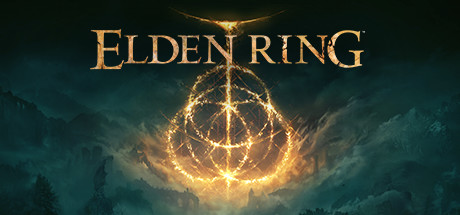
FromSoftware’s open world remains the best argument for a game that refuses to tell you anything. No quest markers, no objective list, no waypoints. You see something in the distance, you walk to it, and it is a real place with something real in it. The Shadow of the Erdtree expansion added a substantial region that assumes you already know what you are doing.
Roughly 55 hours for the main path, well past 100 if you explore. Difficult, and unapologetic about it.
Hardware note: the frame rate is capped at 60 in the standard PC build, which means a flagship GPU is enormously overqualified on raw output. What it buys you is stability. Elden Ring has a documented history of traversal stutter — brief hitches when crossing into new areas as shaders compile and assets stream — and fast storage plus a strong CPU is what smooths that out. Approximately 60GB installed.
Red Dead Redemption 2

Still, seven years on, the most convincing world anyone has built. Rockstar’s western is slow in a way that is deliberate rather than accidental, and it either wins you over in the first six hours or it does not. If it does, nothing else feels quite the same afterwards. The lighting, weather and animation systems have aged extraordinarily well.
Roughly 50 hours for the story, 80 or more with side content.
Hardware note: two practical things. Run it on the Vulkan renderer rather than DirectX 12 — it is consistently better behaved on most configurations. And clear space: this is one of the largest installs in mainstream PC gaming at around 150GB. There is no ray tracing here, but the volumetric lighting and shadow work at maximum settings remain genuinely demanding at 4K.
The Witcher 3: Wild Hunt

The next-generation update gave a 2015 game a second life, and the writing was always the reason to play it. The side quests are better than most games’ main stories. The two expansions, Hearts of Stone and Blood and Wine, are extensive enough to count as sequels.
Roughly 50 hours for the main story, over 100 with both expansions.
Hardware note: the updated version added ray tracing and a DX12 renderer, and the DX12 path is noticeably more CPU-hungry than the older DX11 mode. If you see stutter with ray tracing enabled, that is usually the cause rather than the GPU. Around 50GB installed.
Which single-player games have the best stories?
If the writing is what you are here for, start with these three.
God of War (2018)

Santa Monica Studio’s reinvention turned a series about rage into one about a father who does not know how to talk to his son, and it works because the game never stops to congratulate itself. It is also one of the best-engineered PC ports Sony has released — it scales cleanly across a wide range of hardware and behaves itself. Roughly 20 hours. Around 70GB.
Cyberpunk 2077

The comeback is complete, and Phantom Liberty is the best thing CD Projekt Red has written. Night City is the densest urban environment in games, and the expansion’s spy-thriller structure gives the writing a focus the base game took time to find.
Hardware note: this is the most demanding entry on the list, and the reason is the path-traced Overdrive mode. Full path tracing is a genuine flagship-and-upscaling proposition even in 2026 — at 4K you will want quality-mode DLSS and frame generation to hold high refresh rates, and VRAM use climbs well past 12GB. Standard ray tracing is far more forgiving. Roughly 24 hours for the main story, 60-plus with Phantom Liberty and side content. Around 85GB with the expansion.
Death Stranding Director’s Cut

Divisive, and worth trying anyway. Kojima made a game about carrying things across a landscape, and the terrain simulation is detailed enough that the walking itself becomes the mechanic. You will either find it meditative or tedious within three hours, and both reactions are legitimate.
Hardware note: built on Guerrilla’s Decima engine and one of the best-optimised games here. It delivers high framerates on hardware well below flagship level, which makes it an excellent choice if you want something visually striking that does not punish your GPU. Roughly 40 hours. Around 80GB.
What are the best action and combat games?
Games where the moment-to-moment feel is the point.
Resident Evil 4 Remake

Capcom rebuilt a landmark without breaking what made it work. The parry system gives combat a rhythm the original never had, and the pacing is close to flawless — roughly 16 hours with almost no filler.
Hardware note: the RE Engine is superb, and this runs beautifully on high-end hardware. The one thing to watch is the texture quality setting, which is unusually VRAM-hungry at its highest tiers. Around 67GB.
Resident Evil Village

Shorter, stranger, more gothic. Roughly 10 hours, and the varied locations mean it never settles into one idea long enough to wear out. Also RE Engine, also very well optimised, and lighter at roughly 35GB.
Marvel’s Spider-Man Remastered

Traversal is the whole thing. Insomniac’s web-swinging is the best movement system in any open-world game, and the story is a genuinely good Spider-Man story rather than a licensing exercise. Roughly 17 hours.
Hardware note: this is a CPU-bound game more than a GPU-bound one, particularly with ray-traced reflections enabled at high framerates — the reflection pass is expensive on the processor. Fast storage matters too, since the streaming system is built around it. Around 75GB.
Marvel’s Spider-Man: Miles Morales

A tighter, more focused follow-up at roughly 7 hours. The shortest game here, and one of the few I would call perfectly paced. Same engine, same hardware profile.
Star Wars Jedi: Survivor

The best Star Wars combat in a game, and I want to be direct about the port. It launched in poor shape on PC — traversal stutter, CPU limitations, performance well below what the hardware suggested. Patches have improved it considerably, but it remains the most CPU-sensitive title on this list, particularly in the larger open areas of Koboh. On a high-end 2026 CPU it is in good shape. It is still the one I would test first before committing. Roughly 20 hours, and a very large install at around 155GB.
Which open worlds are worth getting lost in?
Grand Theft Auto V

The single-player campaign remains Rockstar’s sharpest satire, and the three-protagonist structure has not been copied well by anyone since. The Enhanced PC release added ray tracing and modern rendering features to a game that was already ageing gracefully. Roughly 31 hours. Around 100GB.
Horizon Zero Dawn Complete Edition
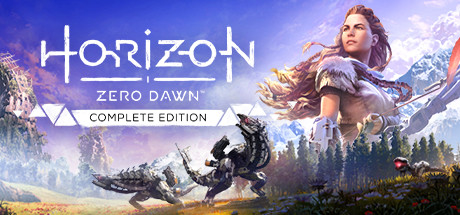
Robot dinosaurs, and a far better science-fiction premise than that phrase suggests. The mystery of what happened to the world is genuinely well constructed. Roughly 25 hours for the main story. Around 100GB.
Horizon Forbidden West Complete Edition

The sequel improves nearly everything — combat, traversal, and some of the most impressive foliage and water rendering on PC. The Burning Shores expansion is included. Roughly 30 hours main story.
Hardware note: an excellent port, but VRAM-hungry at 4K with maximum textures. This is one of the games where 16GB of video memory stops being a luxury. Large install, around 150GB.
Hogwarts Legacy

The castle is the achievement. Whatever you make of the game around it, Hogwarts itself is one of the most convincingly realised spaces in any open-world game — it rewards wandering with no objective at all. Roughly 30 hours.
Hardware note: ray tracing was rough at launch and remains the least polished part of the technical package. VRAM demands are high with RT enabled at 4K. Around 85GB.
Assassin’s Creed Valhalla

The largest game here by a distance — roughly 60 hours for the main story and well past 140 for full completion. That scale is either the appeal or the problem, depending on you. CPU-heavy in dense settlements. Around 110GB.
Assassin’s Creed Mirage

Deliberately the opposite: a compact, stealth-focused return to the series’ original shape at roughly 20 hours. Also the lightest AAA install on this list at around 40GB, and comfortably the least demanding of the modern Assassin’s Creed entries.
Forza Horizon 5

The best-optimised game on this page, full stop. Playground’s racer holds very high framerates on capable hardware while looking superb, which makes it the natural choice for a high-refresh monitor. The solo campaign is complete and substantial at roughly 20 hours, though online features exist alongside it. Around 110GB.
Dying Light 2 Stay Human
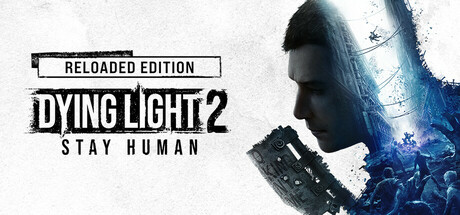
First-person parkour through a zombie-infested city, and the movement is the reason to play. Post-launch updates significantly improved both the combat and the technical state. Co-op exists; the campaign is fully playable alone at roughly 20 hours, or 70-plus for everything. Around 60GB.
Quick comparison: playtime, size and hardware demand
Playtimes are approximate main-story figures and vary widely with play style. Install sizes are approximate and change with patches — check the store page before you commit drive space.
| Game | Main story (approx.) | Install (approx.) | Primary demand | Fully offline |
| Baldur’s Gate 3 | 75 h | 150 GB | CPU (act three) | Yes |
| Elden Ring | 55 h | 60 GB | CPU / storage | Yes |
| Red Dead Redemption 2 | 50 h | 150 GB | GPU | Yes |
| The Witcher 3 | 50 h | 50 GB | CPU with RT | Yes |
| Cyberpunk 2077 | 24 h | 85 GB | GPU (path tracing) | Yes |
| God of War (2018) | 20 h | 70 GB | Balanced | Yes |
| Death Stranding DC | 40 h | 80 GB | Light for its looks | Yes |
| Resident Evil 4 Remake | 16 h | 67 GB | VRAM (textures) | Yes |
| Resident Evil Village | 10 h | 35 GB | Light | Yes |
| Spider-Man Remastered | 17 h | 75 GB | CPU with RT | Yes |
| Spider-Man: Miles Morales | 7 h | 75 GB | CPU with RT | Yes |
| Star Wars Jedi: Survivor | 20 h | 155 GB | CPU | Yes |
| Grand Theft Auto V | 31 h | 100 GB | Balanced | Yes |
| Horizon Zero Dawn CE | 25 h | 100 GB | Balanced | Yes |
| Horizon Forbidden West CE | 30 h | 150 GB | VRAM at 4K | Yes |
| Hogwarts Legacy | 30 h | 85 GB | VRAM with RT | Yes |
| Assassin’s Creed Valhalla | 60 h | 110 GB | CPU | Yes |
| Assassin’s Creed Mirage | 20 h | 40 GB | Light | Yes |
| Forza Horizon 5 | 20 h | 110 GB | Very well optimised | Solo campaign |
| Dying Light 2 | 20 h | 60 GB | Balanced | Solo campaign |
Which one should you play first?
A short decision path, because twenty options is too many.
You want the best game on the list and have the time. Baldur’s Gate 3. Nothing else here offers as much, and nothing else responds to you the same way.
You want to feel your new GPU working. Cyberpunk 2077 with path tracing enabled. It is the most visually advanced thing you can install, and it is the one that will make the hardware feel worth it.
You have a high-refresh monitor and want to use it. Forza Horizon 5. Beautiful, and it runs like nothing else here.
You want a complete story this week. Resident Evil 4 Remake or God of War. Both finish in under twenty hours without feeling truncated.
You want to be genuinely challenged. Elden Ring, and go in without a guide.
You want to switch your brain off and move beautifully. Marvel’s Spider-Man Remastered.
You have one evening. Marvel’s Spider-Man: Miles Morales. Seven hours, no padding.
What should you know before buying?
Check the CPU requirement, not just the GPU one. The most common disappointment with a new build is stutter in a CPU-bound game that the graphics card cannot fix. Baldur’s Gate 3, Jedi: Survivor and Assassin’s Creed Valhalla are the ones to watch here.
Count your storage before you buy the game. Six titles on this list exceed 100GB. Installing four of them fills a 2TB drive.
Wait out shader compilation. Several of these games compile shaders on first launch or during early play, and performance during that window is not representative. If a game stutters in its opening hour, give it time before you start changing settings.
Use upscaling deliberately. Quality-mode DLSS or FSR at 4K is close to indistinguishable from native and costs far less performance. Frame generation is excellent for single-player games specifically, where the small latency increase does not matter the way it would in a competitive shooter.
Buy on sale. Almost everything here discounts heavily and regularly. Only Baldur’s Gate 3 holds its price with any consistency.
Frequently asked questions
What are the best single-player PC games right now?
Baldur’s Gate 3, Elden Ring, Red Dead Redemption 2 and The Witcher 3: Wild Hunt are the strongest all-round choices. For shorter experiences, Resident Evil 4 Remake and God of War are the best options.
Which single-player game has the best story on PC?
God of War (2018) has the best-told story, Cyberpunk 2077 with Phantom Liberty has the best writing, and Baldur’s Gate 3 has the most reactive narrative — the one where your choices genuinely change what happens.
Do these games need an internet connection?
Every game on this list is playable offline once installed. You will need a connection for the initial download and for storefront activation. Forza Horizon 5 and Dying Light 2 have optional online features, but both campaigns work fully solo.
Is Cyberpunk 2077 worth playing in 2026?
Yes. The game that launched in 2020 and the game available now are substantially different. Phantom Liberty in particular is among the best expansions the medium has produced.
How long does it take to finish Red Dead Redemption 2?
Roughly 50 hours for the main story and 80 or more with meaningful side content. Full completion runs past 170 hours.
Which of these is hardest on a PC?
Cyberpunk 2077 with path tracing, by a clear margin. For CPU load specifically, Baldur’s Gate 3’s third act and Star Wars Jedi: Survivor are the most demanding.
What is the best single-player game for someone new to PC gaming?
Marvel’s Spider-Man Remastered or God of War. Both are approachable, well-paced, technically solid, and finish in under twenty hours.
Do I need 16GB of VRAM?
At 1440p, 12GB is workable for everything here. At 4K with maximum textures and ray tracing, 16GB is where you stop making compromises — Horizon Forbidden West, Hogwarts Legacy and Cyberpunk 2077 are the titles that will find the limit.
About the author
Hasmi writes about single-player PC gaming and PC hardware at Fitgirl-Repacks. The focus here is straightforward: what is worth playing, what it demands from your machine, and what nobody tells you until after you have installed it.
A note on method: the hardware guidance in this article is drawn from published system requirements, documented engine behaviour and established community consensus. Where figures are approximate, they are labelled as such. Playtimes and install sizes vary with play style and patches — treat them as guidance, not specification.
⚠️ No download links are currently available for this title.